
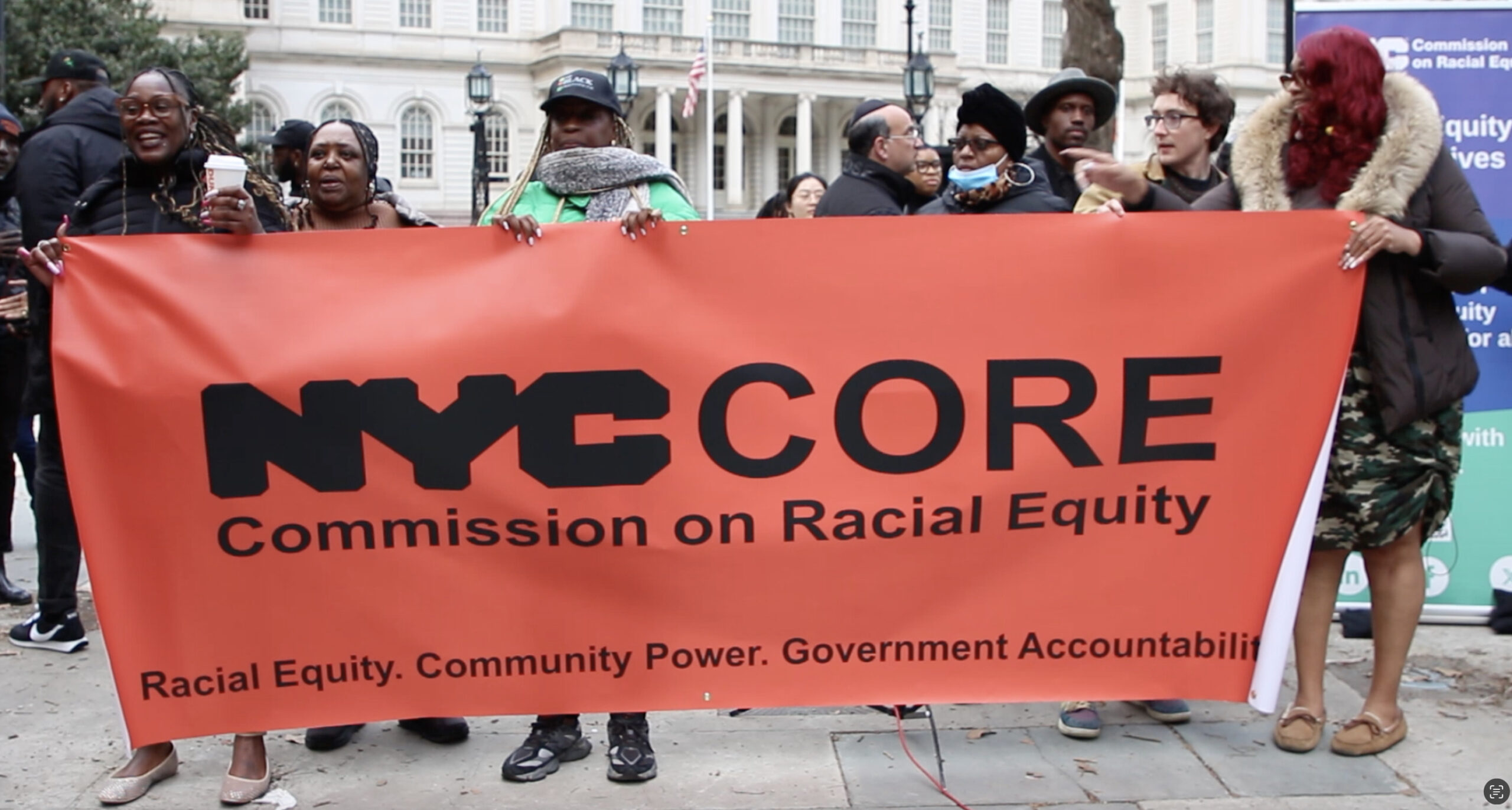
On Wednesday, April 1, 2026, a group of over a dozen key solidarity economy organizers, including the Community Worker Ownership Project (CWOP), met to hear the Chair and Executive Director of the NYC Commission on Racial Equity (NYC CORE), Linda Tigani, speak about the role of NYC CORE and how the solidarity economy can play a key role in reducing racial disparity in New York City by centering racial and social justice in the City’s affordability agenda for all New Yorkers.
What is CORE?
In November of 2022, in the wake of the murder of George Floyd and the racial justice uprising, New York City voted to establish the NYC Commission on Racial Equity (NYC CORE). NYC CORE’s mandate is to “hold NYC government accountable to advance racial equity in government operations and to increase the voice of the community in government decision making.” (City of New York, n.d.) The establishment of CORE is written into section 3404 of the New York City Charter. (N.Y.C. Charter § 1127, 2025) making racial equity in New York City the law. According to NYC CORE’s website, the Commission is responsible for the following requirements under the law:
- Identify and propose community equity priorities. These community equity priorities will inform city government’s newly required racial equity planning process and actions.
- Review and publicly comment on the new citywide Racial Equity Plans.
- Publicly track agency compliance with Racial Equity Plans and processes.
- Receive complaints about agency conduct that may have the effect of exacerbating racial equity disparities and make recommendations to agencies to address such complaints where appropriate.
- Respond to requests of the speaker of the council and its committees regarding racial equity concerns.
As a part of its mandate, on November 20, 2024, NYC CORE released 18 community equity priorities after interviewing thousands of New Yorkers on what aspects of racial equity felt most important to them. (NYC Commission on Racial Equity, 2024). For the purposes of this article, there are three priorities that are relevant for advancing solidarity economy initiatives as part of a racial equity plan that is in line with increasing affordability for all New Yorkers. The three priorities are as follows:
- 13. Increase access and lower the cost to basic needs such as quality food, transportation, medical, and housing.
- 15. Remove barriers and increase access for people harmed by racial and social injustice to learn about, buy, and keep ownership of property.
- 17. Remove the gaps in racial, gender identity, sexual orientation, age, and disability access to job training and funds to start businesses. (NYC Commission on Racial Equity, 2024)
Here at CUNY SLU
Here at the City University of New York School of Labor and Urban Studies, members of CWOP, are interested in the ways to advance the solidarity economy and how NYC CORE’s mandate may play a role in such advancement. For the first time, the Mayor’s office released the racial equity plan on Monday, April 6th. Former Mayor Eric Adams failed to release a racial equity plan and NYC CORE subsequently sued the Mayor’s office for release of the plan. NYC CORE is continuing to fight in court to make sure the City fulfills the voters will and release the racial equity plan and ensure that it guides the city’s budget, as mandated by law.
CWOP suggests that solidarity economy actors across the city play a role in providing feedback to the plan, particularly as it relates to how racial disparities in business and our economy can be addressed through the promotion of various forms of coops, community land trusts, and credit unions that support community development without displacement.
For next steps, we at CWOP ask that the NYC solidarity economy community get familiar with the Racial Equity Plan released by the Mayor’s office on Monday April 6th, and plan to provide feedback supporting the solidarity economy as a means for reducing racial disparity. You can sign up to review the plan here. Our comments will be important to voice!
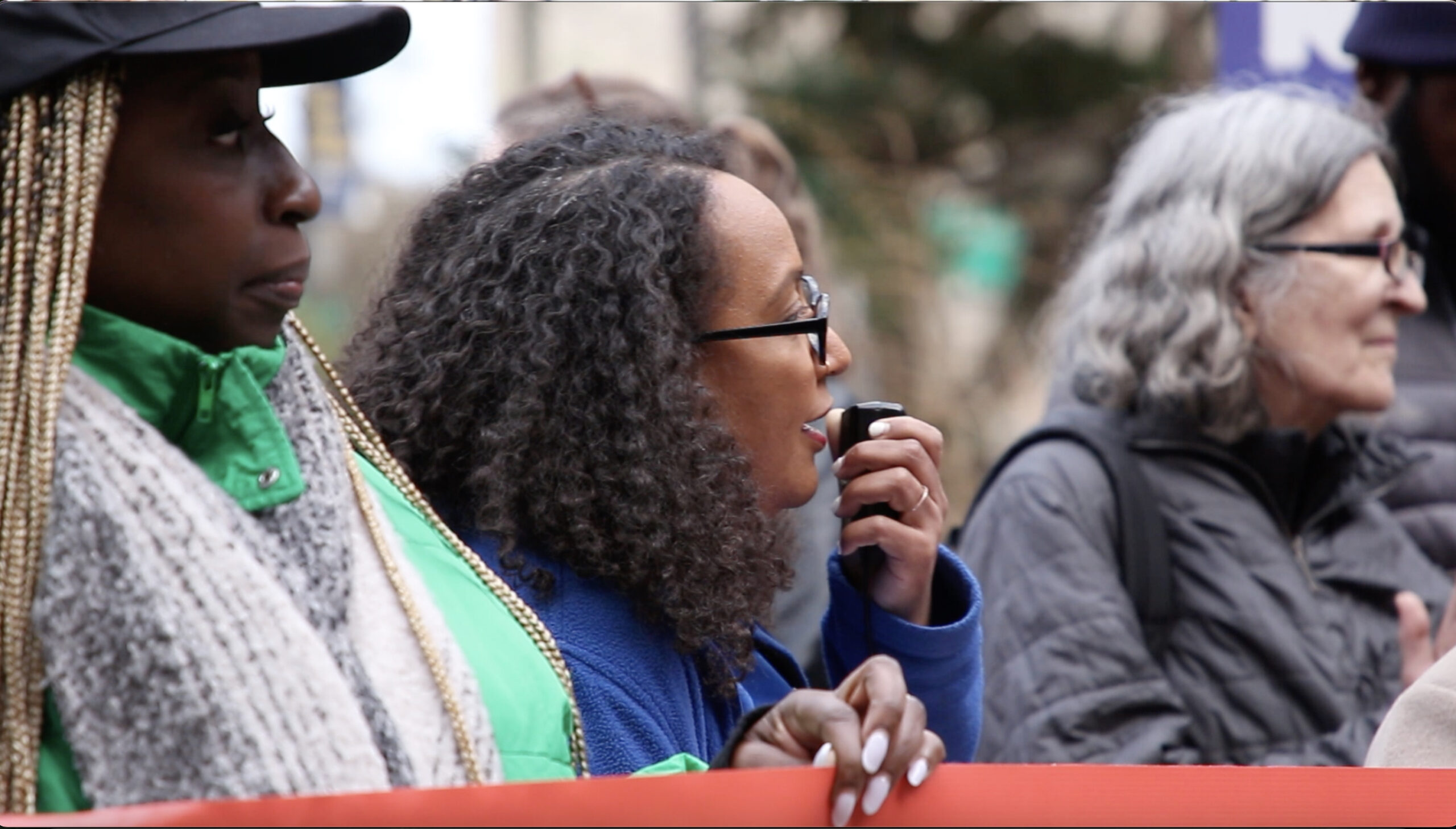
Additionally, on Monday, April 6th, CORE held a rally in response to the racial equity plan that was released. CORE, along with other community organizations, will plan a five-borough tour in the coming weeks to speak to and hear from New Yorkers about the racial equity plan that was released by the Mayor’s office. There will be a 30-day period for New Yorkers to review the plan and give feedback.
At the rally, many voices echoed that without funding and the inclusion of community voices, the plan has no weight. The city budget was negotiated before the plan was released so the 30-day period ahead is a real chance to give voice to making sure the plan is funded and implemented with community-driven priorities.
Read more here: Advancing Truth, Healing, Reconciliation, and Reparations in New York City
CALL TO ACTION:
- You can follow CORE on IG @racialequitynyc and on Facebook
- Get familiar with the Racial Equity Plan
- Sign up to review the plan HERE
- Come to one of the stops on the five-borough Racial Equity Plan tour

