
By Rawnak N. Zaman
As a student in the CUNY School of Labor and Urban Studies’ Workplace Democracy and Cooperative Ownership program and researcher with an urban planning background, I’ve had the privilege of learning about New York City’s robust cooperative and mutual aid ecosystem and the people whose often unseen efforts enhance our livability. The food justice movement is a prime example. At this moment, visions around food access are coalescing at various levels: advocates and experts (including SLU Professor Rebecca Lurie) respond to a City-led proposal to establish a municipal grocery store in every borough, communities interact with newly formed cooperatives, and students right here at SLU work to develop a campuswide food access initiative based in mutual aid. With the Mamdani administration moving forward with City-sponsored groceries, cooperatives and other elements of the solidarity economy can help lay the groundwork for a truly sustainable citywide food ecosystem. This post surveys recent developments at the intersection of solidarity economy and food justice with these very dynamics in mind.
Situating grocery stores in the solidarity economy
In the lead up to the 2025 mayoral election, now-Mayor Zohran Mamdani introduced his idea for five City-owned groceries as a “public option for produce” that would sell at low prices, leverage wholesale distribution channels and local supply chains, and engage community preferences. Now more than ever, services that historically have been privatized in the U.S., such as Internet, healthcare, and access to fresh food, have profound impact on life outcomes, presenting an ethical dilemma. In practice, public options can recalibrate markets that have failed to meet people’s basic needs. They can range from the government directly administering a low-cost or fee-free service to partnering with a private enterprise to produce essential goods for distribution at low cost as an alternative to market rate options.
The building blocks of the social and solidarity economy have endured in political and social movements across time and geography: mutual aid, consensus decision-making, collective ownership. Their presence holds up a mirror to deficiencies in the types of governance widely accepted as the norm. As sociologist and solidarity economy (SE) scholar Michelle Williams observes in a 2014 essay: “Under neoliberalism, the market and its effects have been extended to growing areas of social life… [The] state has increasingly focused its regulatory capacity on creating conducive conditions for market exchange rather than its former social contract role.”
Against a system where social progress follows capital by design, SE adopts a paradigm where the status quo is not affixed within the market nor the state but, writes Williams, “a continual process of (re)making social relations based on democratic practices, local bottom-up experiments, redistribution, solidarity, interconnections, reciprocity, and social justice.” These qualities differentiate cooperatives, with their member/worker-led, patronage/profit-sharing, consensus based model of enterprise, from a conventional firm. Thus, strengthening SE should be a part of the municipal strategy.
The grocery business is arduous. On top of commercial rent pressures, purveyors compete for customers in product range, proximity to activity hubs, and even the adoption of delivery apps. Supply chain disruptions can be wide-ranging; per NPR, recent catalysts have included the invasion of Ukraine, avian flu, and tariffs. And profit margins in the supermarket business are typically slim to begin with; chains excel in leveraging favorable procurement terms, drawing from industry expertise, streamlining operations, and generating high sales volumes. In 2024, amid supermarket closures and consolidation by major operators, the City of Chicago commissioned a feasibility report on municipal groceries. It concluded that while a City-run model is indeed achievable, Chicago’s efforts would be most effective in “de-risking” through strategies like workforce development programs and providing low-cost space, financing, and business support to partner operators. A year after the report was published, officials changed course after being unable to secure a qualified operator, opting for a public market instead.
Public-private partnerships (PPPs) are quickly becoming a preferred strategy for resource-strapped municipalities, often with incentives to make the partnership attractive or viable to a for-profit collaborator. NYC has several such tools in its cache, including zoning and tax incentives for the siting of new supermarkets under the Food Retail Expansion to Support Health (FRESH) initiative first implemented in 2009. PPPs alone are not a panacea. In the case of FRESH, a 10-year look back by the CUNY Urban Food Policy Institute (CUFPI) found that its impact was stymied by proximity and incompatible floorplates as well as behavioral patterns related to diets and shopping preferences. During the mayoral campaign, Mamdani’s team expressed interest in redirecting FRESH subsidies toward the municipal grocery initiative.
How, then, would local cooperatives shift the needle? Cooperatives, as businesses, do have to retain sufficient revenues over costs to survive. They have the additional benefit and challenge of collective management practices, whether in how labor is exchanged, financial resources are pooled, or critical decisions are made. Their potential is not in their isolated operations, but in their contribution to the larger SE effort. This has to be an intentional act. A cooperative business that adheres to humanist principles and uplifts its members is one spoke in the wheel. SE forms when efforts combine, as when products are sourced from local and regional cooperatives and small businesses, businesses bank at community development financial institutions, and resources and services are pooled or traded. This creates an ecosystem that can help to demonstrate to consumers that alternative models of enterprise are viable.
Nodes in a community network
Issues of network and scale are thorns in the side of individual grocery operators. A recent report by the nonprofit Community Food Advocates modeled the output of five City-owned supermarkets and found that the plan would not be sustainable because of limited reach, stock, and savings from being unable to meet profit targets and get wholesale deals. “The city would subsidize 5 stores to equal the output of 1 regular store,” they write, recommending instead a 20-store model likened to Costco but without the membership fees. They also support complementing City-owned groceries with cooperative development and incubation, citing that the latter have higher survival rates at five years than conventional businesses.
In Central Brooklyn, historically a bastion of Black-led mutual aid and organizing, the Central Brooklyn Food Democracy Project (CBFDP) is coalescing a localized food-based economy down the supply chain. The Central Brooklyn Food Co-op, a consumer cooperative in development since about 2015, envisions their future brick and mortar location as the “nerve center” for the coalition. Being able to pool resources like equipment, administrative and technical staff, and space to facilitate business is an advantage of a cooperative network. According to a CBFDP-commissioned study by the Pratt Center on the decision-making habits of institutional buyers in the food sector, internal capacity and size can make or break a procurement opportunity. Well-resourced contractors are quicker with paperwork and more easily fulfill large orders given their storage and delivery capacity. Low or no cost leases are one way the City can engage with local community enterprises. Pratt Center also points to reliable nonprofit partners as an early collaborator for startup cooperatives.
For cooperatives, there are pathways to economies of scale if the City and its contractors act as anchor clients and City programs like the Worker Cooperative Business Development Initiative are expanded with food sector-specific support all along the supply chain. To achieve the necessary scale and geographic coverage, NYC need not start from scratch. According to the Cooperative Economics Alliance of NYC, there are already nearly 100 community supported agriculture (CSA) groups across the five boroughs, partnerships where consumers buy shares of a local farm’s harvest in advance and receive a regular supply of produce in exchange. They resemble buying clubs, which legal scholars Dan DePasquale, Surbhi Sarang, and Natalie Bump Vena identify in one 2018 article as an entry point to cooperative food access for communities with little prior experience in consumer cooperatives. With a buying club as the pilot, they write, the City could then assist in the conversion to cooperatives.
In addition to operating the majority of farmers’ markets citywide, the nonprofit GrowNYC also distributes CSA-style food boxes and facilitates a year-round distribution program between regional farms and local wholesale buyers. And in another example, CUFPI’s director Nevin Cohen notes in a recent articlethatthe Department of Health and Mental Hygiene issues street vendor permits for selling produce in food deserts. Different strategies for provisioning food and a flexible approach to form, whether mobile or brick-and-mortar, will help expand food service areas and allow participants in a municipal strategy to be nimble and responsive to neighborhood preferences.
Maintaining autonomy
Quebec, home to the most Canadian cooperatives, demonstrates how government can facilitate cooperativism. Core to Quebec’s half-century of cooperative development is the independent organization Chantier de l’Economie Sociale, a convener of cooperative efforts that receives robust government support to maintain stakeholder relationships across sectors and advocate for further development and new tools. State apparati like Investissement Québec, the province’s economic development corporation, finances up to 100 percent of cooperative costs such as startup, space, acquisition of patents or other assets, and the purchase of employer shares. Desjardins, the province’s largest independent, cooperative network of caisses—credit unions and cooperative banks—boasts over seven million members and clients and more than $100 million invested toward cooperative efforts regionally. Efforts are scaled through regional development cooperatives as well, and in 2020 the government also funded the creation of human resources-oriented cooperatives to further assist the cooperative community.
Insomuch as a state entity introduces policies to facilitate the development of nonprofits and cooperatives, it has its priorities. In the absence of business practices that uphold solidarity principles, cooperatives risk commodification all the same. There is also an instinct to formalize relationships to assure certain benefits, like funding. Yet, by aligning with state agendas or structures to achieve their work, a group may risk obscuring their own mission. Beyond the development of cooperatives through financials, governance structures and bylaws, and agreed upon principles, the movement work itself is existential, especially as the ecosystem grows ever more complex. Long-term sustainability depends upon momentum on the side of advocates to build consensus, organize, and represent these interests, continually reiterating the purpose of the experiment. This self-governance is what differentiates cooperatives and other instances of economic democracy from a conventional public-private partnership.
Under an administration that is aligned with the foundational principles of SE, NYC has the opportunity to use the grocery sector as a pilot to further engage in homegrown cooperatives through a variety of strategies. Instead of simply issuing requests for proposal for partners in grocery operations and engaging the same players, the City could incubate a new generation of cooperatives that leverages expertise borne out of mutual aid networks and food justice movements. In the procurement process, the preferential review of minority- and women-owned enterprises could be expanded to include alternative forms of enterprises and location-based qualifiers to further invest in local capacity and wealth generation. In neighborhoods where there is an existing cooperative ecosystem, the City could investigate the feasibility of a program that supports existing independent grocers and supermarkets in tapping into that network.
At the core should be an understanding about the respective roles of the city, nonprofit partners, financial operators, and cooperative workers, members, and owners. Besides establishing grocery stores, there must be a plan for their long term maintenance and survivability regardless of the political environment. In the short term, cooperatives can be an entry point for people to enter SE and reinvest into businesses that support communities, especially those in neighborhoods that have long been ignored because they are not attractive to the market. In the long term, successes would strengthen popular confidence in alternative enterprises and challenge the notion that what we have right now is the best that society has to offer.
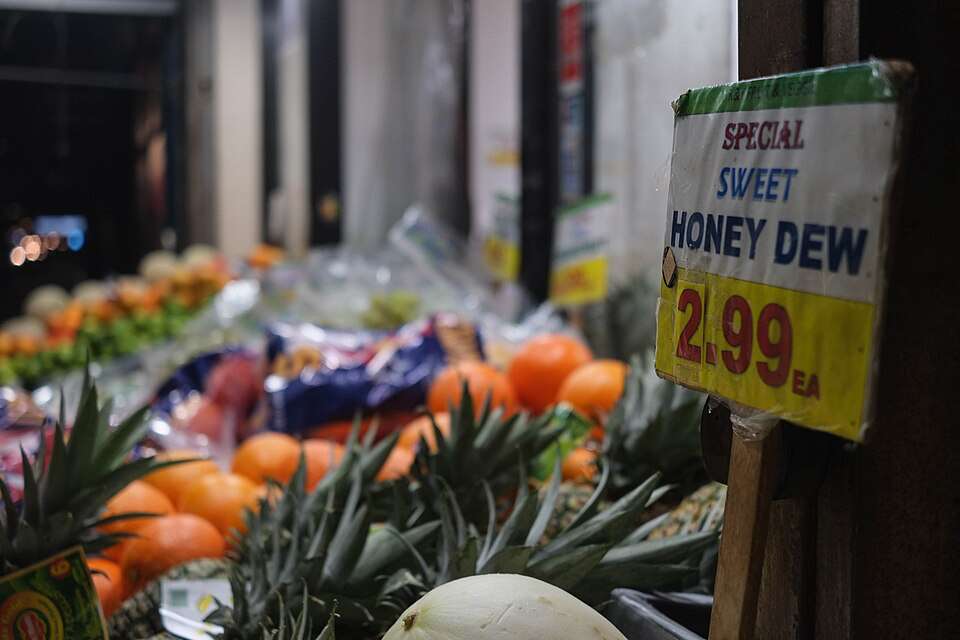
Photo by Paul Sableman/WikiCommons


